Online fame is often presented as a shortcut to freedom: work from anywhere, build a community, earn from creative ideas and turn a personal interest into a career. The public usually sees the finished video, the brand partnership or the milestone announcement. It rarely sees the planning, uncertainty, privacy trade-offs and business risks behind that visible success.
The phrase influencers gone wild can make creator culture sound like a sequence of outrageous moments. But the more revealing story is often quieter. A creator may struggle to switch off, feel pressured to reveal more of their life, depend too heavily on one platform or discover that a growing audience does not automatically create a stable business.
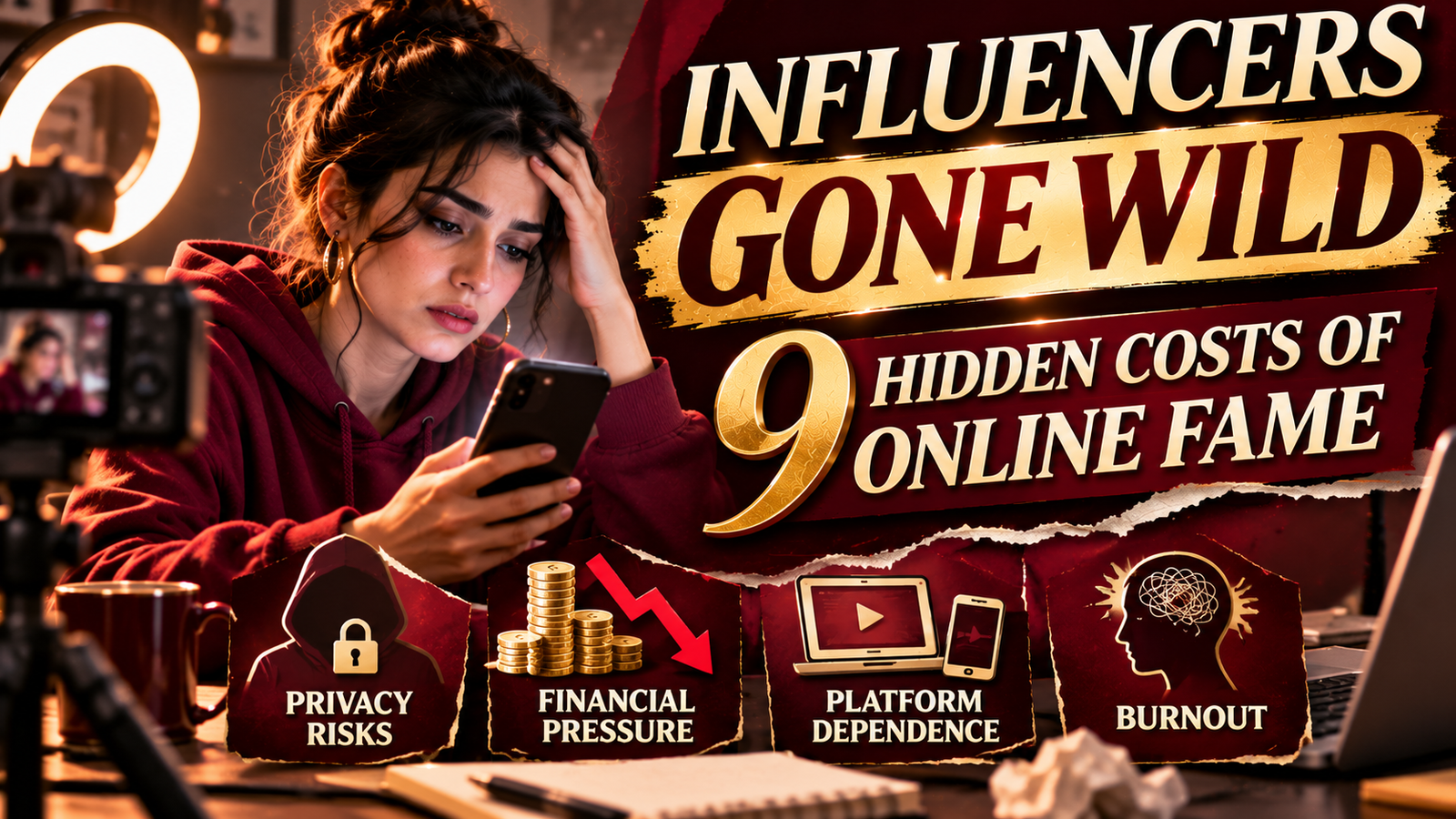
This article looks at nine less-discussed costs of online fame. It is not an argument against becoming a creator. It is a practical look at the systems and decisions that can make a creative career more sustainable. Understanding influencers gone wild means examining the pressures behind the content, not simply judging the person on screen.
1. The pressure to be constantly available
A traditional job usually has a defined working day. Creator work can blur that boundary. Comments arrive at night, a trend appears during a weekend and a brand may expect a quick response. When an audience becomes accustomed to frequent updates, taking a break can feel like disappointing people.
This pressure is one reason influencers gone wild stories sometimes involve emotional posts or impulsive livestreams. A creator who feels watched all the time may start responding before thinking through the consequences. The answer is not to disappear from the internet; it is to establish predictable boundaries.
Creators can set publishing hours, schedule routine posts and decide which messages deserve a reply. They can also tell their audience when they are taking a break. A clear boundary is more sustainable than pretending to be available every minute. The phrase influencers gone wild should not obscure the ordinary workload that sits behind a public account.
2. Personal identity can become a product
Many creators begin by sharing a hobby, skill or point of view. As the audience grows, the creator’s personality may become central to the business. Followers expect a familiar tone, appearance and lifestyle. Brands may want access to the same identity that made the account popular.
The risk is that a person begins to feel responsible for maintaining a character rather than expressing a genuine interest. Some discussions of influencers gone wild focus on sudden changes in behaviour, but a creator may also be reacting to years of pressure to remain entertaining, relatable or controversial.
A useful safeguard is to separate personal values from the format of the content. A creator can experiment with new subjects without treating every change as a betrayal of the audience. They can also keep parts of life private. Authenticity does not require total access. This distinction gives influencers gone wild conversations more context than a simple accusation of being fake.
3. One platform can become a fragile business foundation
A large following on one platform can look like a strong business asset. Yet the creator does not control the platform’s recommendation system, account policies, monetisation rules or technical availability. A change in distribution can reduce reach even when the quality of the work remains consistent.
This is a business risk behind influencers gone wild headlines that celebrate sudden growth without asking how durable it is. A creator who depends on one source of traffic may find that a policy change or account restriction affects income immediately.
Diversification can reduce that exposure. Creators may build an email list with clear consent, maintain a simple website, publish on more than one suitable channel and develop products or services that do not depend entirely on platform payouts. The goal is not to be everywhere. It is to avoid making one company’s algorithm the only route to an audience. That is a more useful lesson from influencers gone wild than chasing a temporary view spike.
Read more: About Qushvolpix Product: 9 Powerful Ways to Separate Facts from Online Claims
4. Audience growth does not guarantee financial stability
High view counts can create an impression of wealth. In reality, revenue depends on many factors: audience location, advertiser demand, content category, platform rules, production costs and the creator’s ability to convert attention into a sustainable offer. A popular post may earn little, while a smaller specialist audience may support a more dependable business.
The phrase influencers gone wild is sometimes attached to extravagant displays of spending, but visible purchases do not reveal a creator’s actual financial position. A sponsored trip may be paid for by a brand. A luxury item may be borrowed, gifted or financed. Viewers should not assume that a carefully staged image represents ordinary income.
Creators can treat the work like a small business: track revenue and expenses, set aside money for taxes where applicable, keep records of agreements and avoid spending based on one unusually successful month. The U.S. Small Business Administration provides general guidance on managing business finances. Local tax and business rules differ, so creators should seek advice relevant to their own location. This financial perspective adds depth to influencers gone wild discussions.
5. Sponsorships can create conflicts that are hard to see
A creator may genuinely like a product and still have a financial relationship with the company selling it. A free sample, affiliate commission, paid campaign or discount code can affect how a recommendation should be understood. The audience needs enough information to recognise that relationship.
When influencers gone wild becomes a trending label around a disputed promotion, the key question should be whether the creator communicated honestly. Did they disclose the partnership? Did they make claims they could support? Did they explain whether they had personally tested the product?
The U.S. Federal Trade Commission explains disclosure expectations in its Disclosures 101 guide for social media influencers. Its endorsement guidance is another useful reference. These are U.S. resources, not a substitute for checking the rules that apply in other countries.
A strong creator policy should require clear disclosures, evidence for product claims and a refusal process for unsuitable partnerships. Transparency protects the audience and the creator’s credibility. It also prevents influencers gone wild coverage from becoming a substitute for examining the actual advertising practice.
6. Privacy can shrink gradually
Creators may share a home office, a daily routine or a favourite local café without intending to reveal sensitive details. Over time, small clues can combine: a window view, a street sign, a delivery label or a predictable schedule. A person who never deliberately published an address may still reveal more than they realised.
This is a less dramatic but serious side of influencers gone wild culture. Public attention can encourage audiences to investigate a creator’s private life, while some creators may overshare because personal access seems to strengthen engagement.
A privacy review can help. Remove identifying details from backgrounds, avoid showing real-time locations, separate personal and business contact information and ask permission before posting images of other people. Consider whether a detail needs to be public at all. The safest information is often the information that never needed to be uploaded. These precautions are relevant whenever influencers gone wild discussions attract unwanted attention.
7. The audience can mistake familiarity for a personal relationship
Regular viewers may recognise a creator’s voice, routines and opinions. That familiarity can feel personal, even though the relationship is usually one-sided. The creator does not know every viewer, and viewers do not know the full person behind the account.
This dynamic can create unrealistic expectations. Some followers may demand replies, explanations or access to private events. Others may feel personally betrayed when a creator changes their opinions or stops sharing details. In influencers gone wild discussions, disappointment can quickly become anger when a viewer believes a creator has broken a relationship that was never actually mutual.
Creators can encourage a healthier community by setting expectations and avoiding language that makes every follower feel like an intimate friend. Viewers can enjoy content while respecting the difference between a public personality and a private relationship. This is not a rejection of community; it is a boundary that helps community remain healthy.
8. A public mistake can become a permanent search result
A post may disappear from a creator’s profile, but copies, screenshots and reaction videos can remain elsewhere. Search engines may surface old controversy pages long after the original discussion has ended. A new employer, customer or brand may encounter that material without seeing the full context or later corrections.
The phrase influencers gone wild can therefore have consequences beyond a short period of trending attention. It may become attached to a name in search results and shape how unfamiliar audiences interpret future work.
Creators cannot control every repost, but they can build a stronger record of reliable work. Publish useful material consistently, maintain an accurate professional website, correct mistakes transparently and avoid trying to bury legitimate criticism with artificial engagement. If a false claim is causing serious harm, consider appropriate professional advice rather than escalating the dispute through public arguments.
Audiences should also be careful about presenting old material as current. Include dates, link to original sources and distinguish a verified event from a recycled screenshot. A fair account of influencers gone wild should make the timeline clear.
9. Burnout can affect creativity and decision-making
Creating regularly requires more than recording a video. It can involve research, scripting, filming, editing, community management, analytics, negotiation and administration. When every task is tied to public performance, the creator may struggle to find time for learning or rest.
Burnout is not proof that someone is ungrateful for an opportunity. It can be a sign that the workload is no longer sustainable. Creators may respond by lowering their publishing frequency, batching production, delegating suitable tasks or changing formats. A smaller schedule that can be maintained is often better than a demanding routine that leads to rushed decisions.
Some influencers gone wild stories are discussed as if a creator simply chose to behave recklessly. A more careful view asks whether exhaustion, pressure or poor working systems contributed to the situation, without using those factors to excuse harmful actions. Explanation and accountability can exist together.
A simple sustainability audit for creators
A creator can review their work once a month using five questions:
- Time: Do I have clear working hours and genuine time away from publishing?
- Income: Would the business survive if one platform or sponsor disappeared?
- Privacy: Have recent posts revealed more about my location or personal life than intended?
- Trust: Are sponsorships, claims and corrections communicated clearly?
- Wellbeing: Is the current publishing schedule realistic for the next six months?
If an answer reveals a weakness, choose one practical adjustment rather than trying to rebuild everything at once. For example, create a separate business email, document sponsorship disclosures or schedule one regular day away from content production. Small systems can reduce the pressure that fuels influencers gone wild moments.
How audiences can support better creator culture
Viewers are not responsible for managing a creator’s business, but their choices influence the environment in which creators work. They can reward useful content rather than only dramatic posts, avoid sharing unverified allegations and respect reasonable privacy boundaries. They can also ask brands to explain how they select creators and how sponsored recommendations are disclosed.
When a controversy appears, check the original source and the date. Look for independent reporting and distinguish an opinion from a confirmed fact. Do not use a creator’s mistake as a reason to target family members or publish private information. These habits make influencers gone wild conversations more informed and less harmful.
Read more: ADHD in Adults: Symptoms, Diagnoses, and Treatment Strategies
Frequently Asked Questions
What does “influencers gone wild” mean?
It is an informal phrase used to describe surprising, controversial or attention-grabbing behaviour by online creators. It is not a formal category and does not prove that a particular allegation is accurate. Context and evidence still matter.
Why is online fame not always financially secure?
Views and followers do not guarantee consistent income. Revenue can depend on advertising demand, audience location, sponsorships, expenses and platform policies. Creators need budgeting and diversified income sources to reduce risk.
How can creators protect their privacy?
They can avoid sharing real-time locations, remove identifying details from backgrounds, use separate business contact information and think carefully before posting information about family or friends. A regular privacy review can identify accidental disclosures.
Should influencers disclose gifted products?
Creators should follow the advertising rules that apply to their location and audience. In many circumstances, a material connection such as payment, gifts or commissions needs clear disclosure. Official guidance from the relevant regulator is the best place to check local requirements.
Can a creator recover after a public controversy?
Recovery is possible, but it depends on the facts, the impact, the creator’s response and what happens afterward. A clear correction, meaningful accountability and consistent improvement are more useful than a single statement designed only to calm criticism.
Conclusion
Online fame can create opportunity, but it also brings costs that are easy to miss from the outside. Constant availability, identity pressure, platform dependence, uncertain income, privacy risks and burnout can affect a creator’s work long before a dramatic controversy appears.
The most useful way to understand influencers gone wild is to look at the structures surrounding the creator as well as the public moment itself. A sustainable career needs boundaries, transparent business practices, diversified foundations and room for life outside the screen. Audiences can contribute by checking claims, respecting privacy and rewarding work that offers real value. Online attention may be unpredictable, but responsible choices can make digital careers more resilient.
